Inbound links are one of the most influential ranking factors in Google, but not all backlinks provide the same value. For SEO teams in B2B SaaS companies, distinguishing between a quality link and a toxic one can mean the difference between scaling in the rankings or receiving a manual penalty.
A quality backlink is not measured solely by the authority of the linking domain. Thematic relevance, link context, anchor text naturalness, and the intent behind the link are equally important. According to Google's updates focused on E-E-A-T (Experience, Expertise, Authoritativeness, and Trustworthiness), links from sites with valuable content related to your niche carry more weight than ever.
In this guide, we break down the concrete characteristics that define a quality inbound link, how to detect them using SaaS monitoring tools, and what strategies to apply to build a solid and sustainable backlink profile for your B2B business.
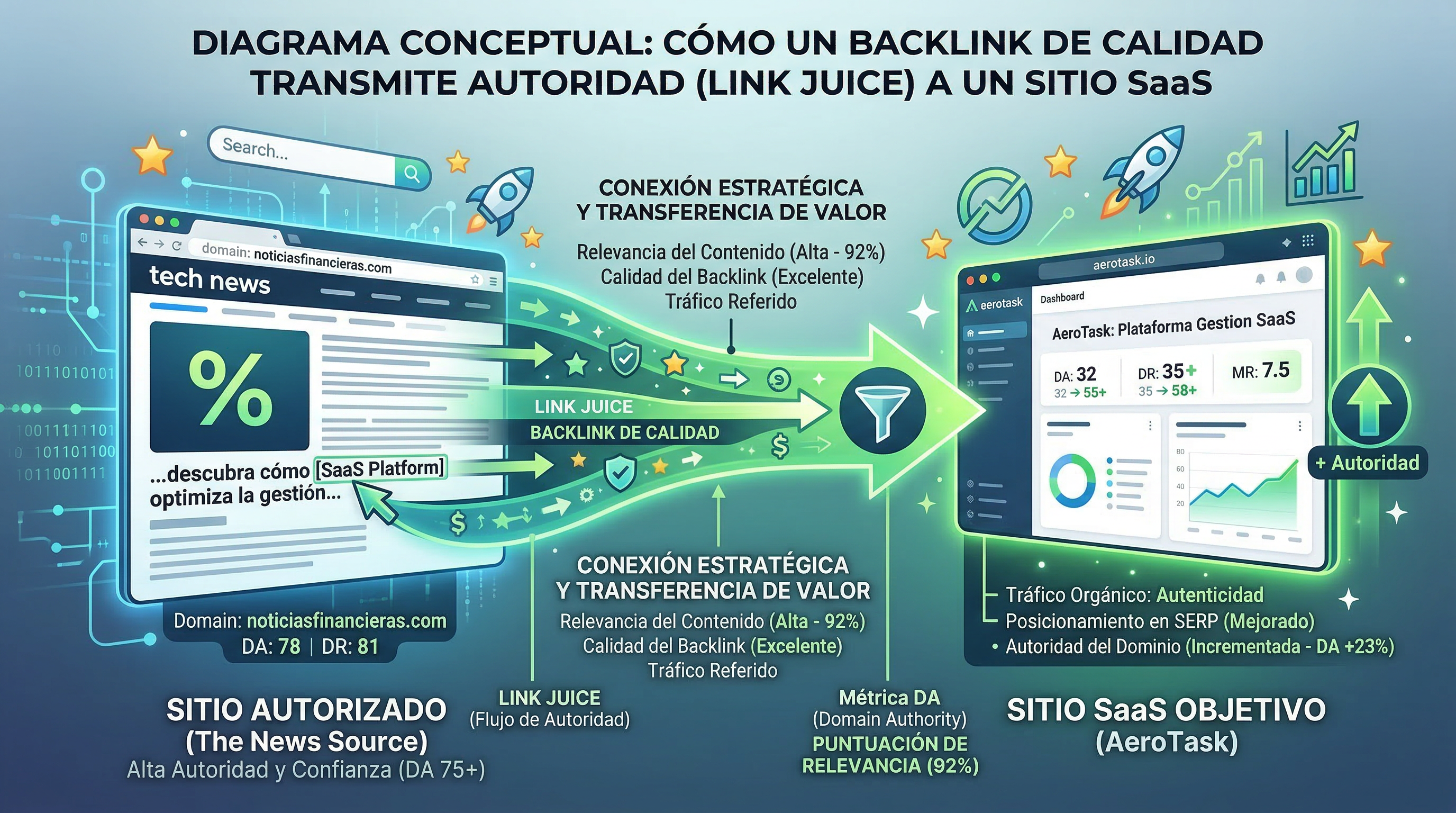
A quality inbound link is one that comes from a website with recognized authority, thematic relevance, and provides real value to the user who clicks. It's not about accumulating hundreds of links, but about obtaining those that Google interprets as genuine votes of confidence.
For a B2B SaaS, this means that a link from a reference blog in your industry (for example, a media outlet specialized in enterprise technology) has more impact than ten links from generic directories or sites unrelated to your sector.
Quality backlinks transmit 'link juice' or page authority, improving your ability to rank for competitive keywords. Furthermore, they act as trust signals for Google: if respected sites link to your content, the search engine interprets that your information is valuable and deserves visibility.
They improve your organic ranking for competitive searches
They increase domain authority (DA) and site trust
They generate qualified referral traffic from relevant audiences
They protect against algorithm fluctuations by diversifying ranking signals
A single link from an authoritative and relevant site can surpass the value of a hundred links from low-quality sites or without thematic context.
You may also be interested in: Why Monitor Your Links? SEO Guide to Detect Risks and Maximize ROI on Backlinks.
Identifying a quality backlink requires evaluating multiple dimensions. It's not enough to look at domain authority; you need to analyze the complete context of the link and its alignment with your SEO strategy.
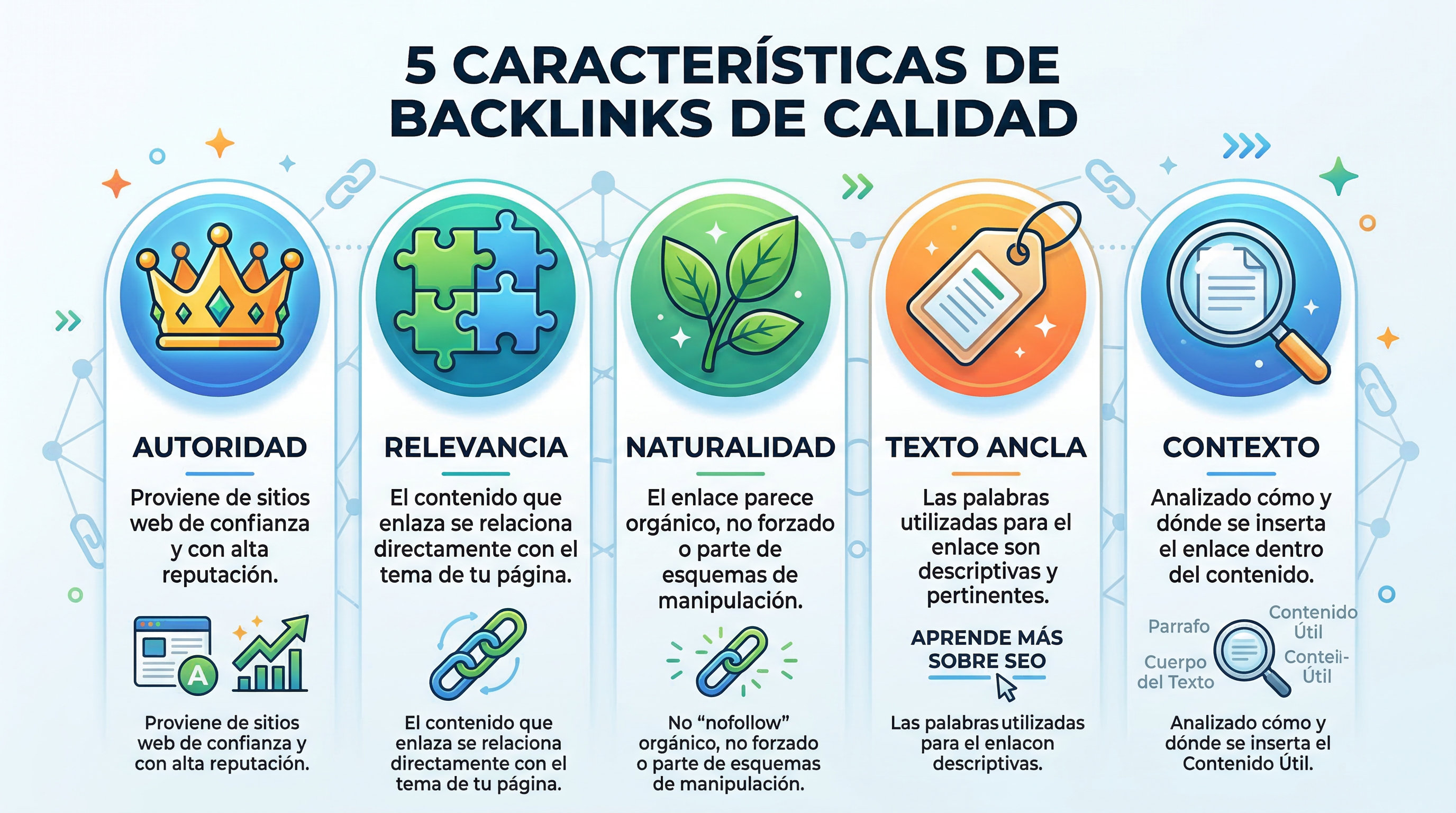
Below, we break down the five pillars that determine whether an inbound link deserves to be in your backlink profile or represents a potential risk.
**Authority of the source domain**: The linking site must have a solid history, authority metrics (DA/DR) above 30-40, and a clean backlink profile. Examples: recognized media, established industry blogs, educational or governmental institutions.
**Thematic relevance**: The content of the source site must be related to your niche. A link from a digital marketing blog to your SEO SaaS is relevant; one from a cooking recipe site is not.
**Link naturalness**: It must be integrated organically into the content, not in footers, sidebars, or lists of links without context. Editorial links within the body of the article carry more weight.
**Descriptive and varied anchor text**: The anchor text should be natural and varied. Avoid always repeating the same exact keyword; alternate between brand, naked URLs, and descriptive phrases like 'backlink monitoring tool'.
**Editorial context and user value**: The link should provide additional useful information. If a user clicks and finds relevant content that expands what they were reading, Google interprets this as a positive signal.
Characteristic | Positive Signal | Negative Signal |
|---|---|---|
Authority | DA/DR > 40, clean history | DA < 20, spam profile |
Relevance | Same sector or niche | Unrelated topic |
Naturalness | Editorial link in body | Footer, sidebar, link list |
Anchor text | Varied, descriptive, natural | Repeated exact keyword, generic |
Context | Adds value for the user | Forced link without context |
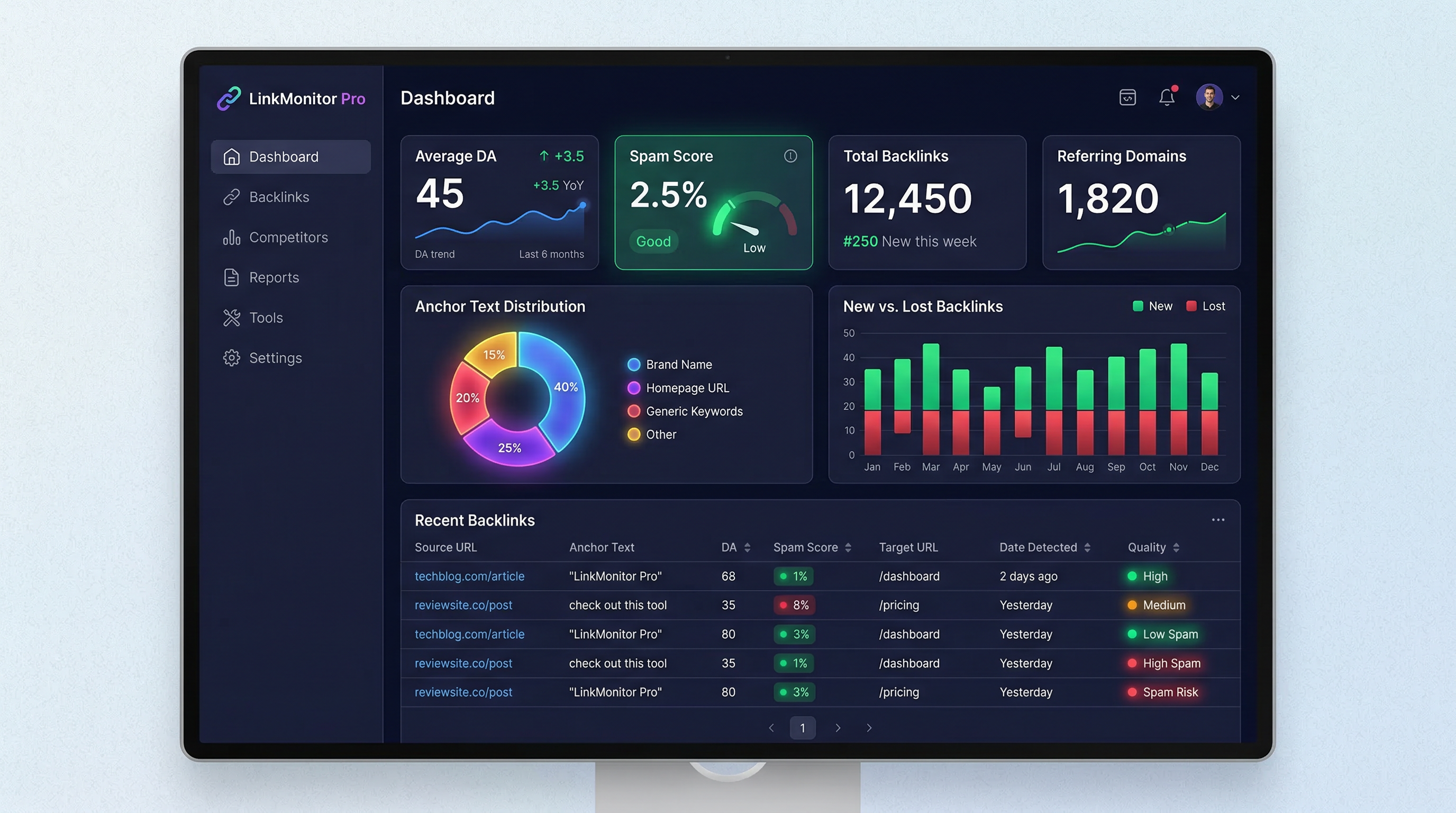
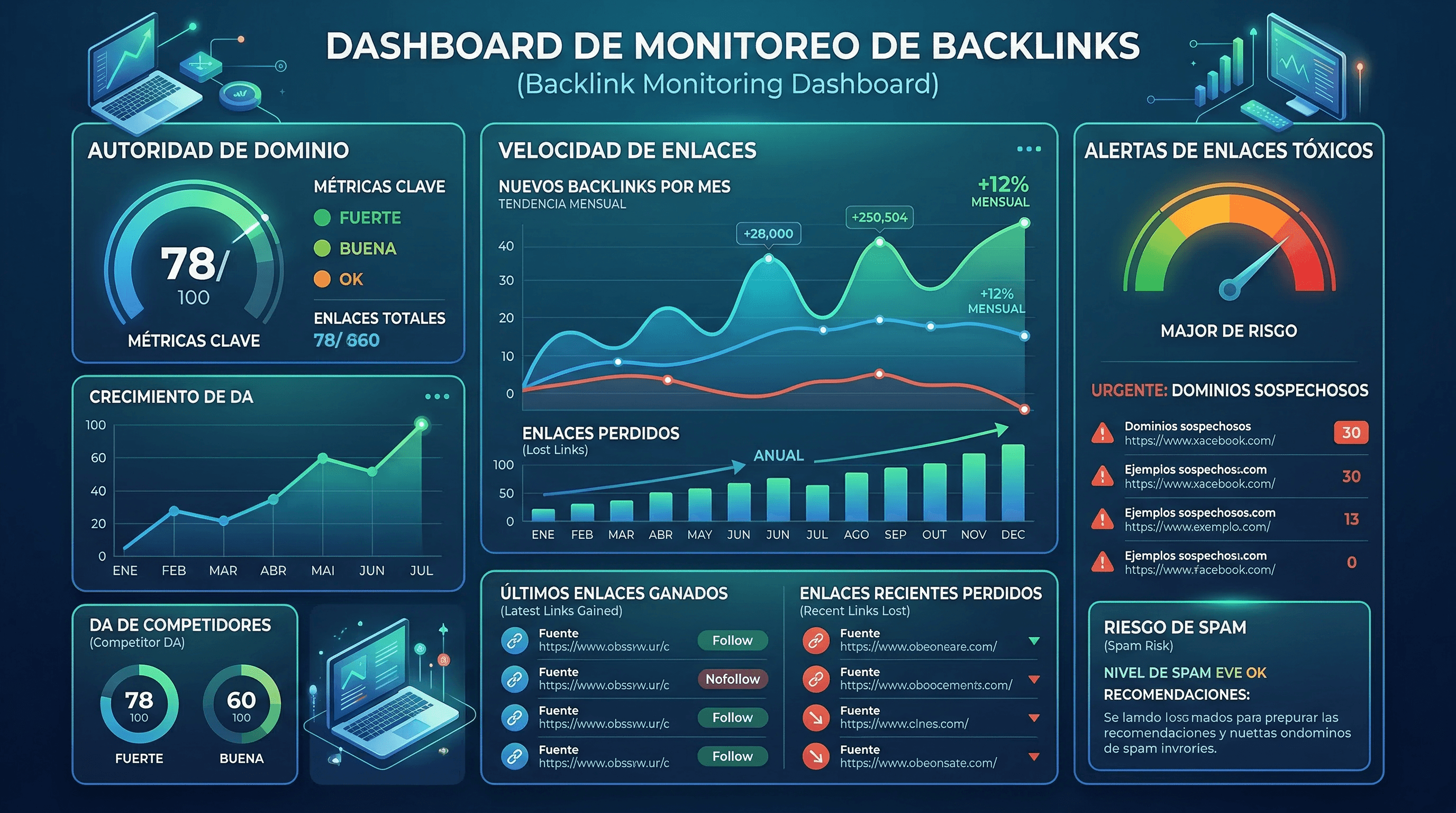
Continuously monitoring your inbound links is essential to maintaining a healthy backlink profile. Specialized SaaS tools allow you to automate the detection of new links, evaluate their quality through quantitative metrics, and receive alerts when suspicious backlinks appear.
Key metrics you should track include Domain Authority (DA) or Domain Rating (DR), spam score, organic traffic of the source site, and anchor text distribution. A balanced backlink profile shows variety in anchor text, links from diverse domains, and a low proportion of nofollow vs. dofollow links.
Platforms like TheLinkHub allow you to centralize backlink monitoring, configure automatic alerts when you receive a link from a domain with a high spam score (>30%), and generate reports that compare the quality of your backlinks with direct competitors.
**Initial audit**: Export your complete backlink profile from Google Search Console and cross-reference data with third-party tools to identify links that GSC does not detect
**Metrics evaluation**: Filter links by DA/DR, spam score, and organic traffic of the source domain. Prioritize links from sites with DA > 40 and spam score < 10%
**Anchor text analysis**: Review the anchor text distribution. A natural profile has ~40-50% brand/URL, ~30-40% generic ('click here'), and ~10-20% exact keywords
**Toxic detection**: Identify suspicious patterns like massive links from the same IP, sites with duplicate content, or domains with a history of penalties
**Continuous monitoring**: Configure alerts to receive notifications when you gain or lose backlinks, especially from high-authority domains
Proactive backlink monitoring not only helps you detect opportunities but also protects you against negative SEO attacks and toxic links that can damage your ranking.
You may also be interested in: Backlink validator and Pricing.
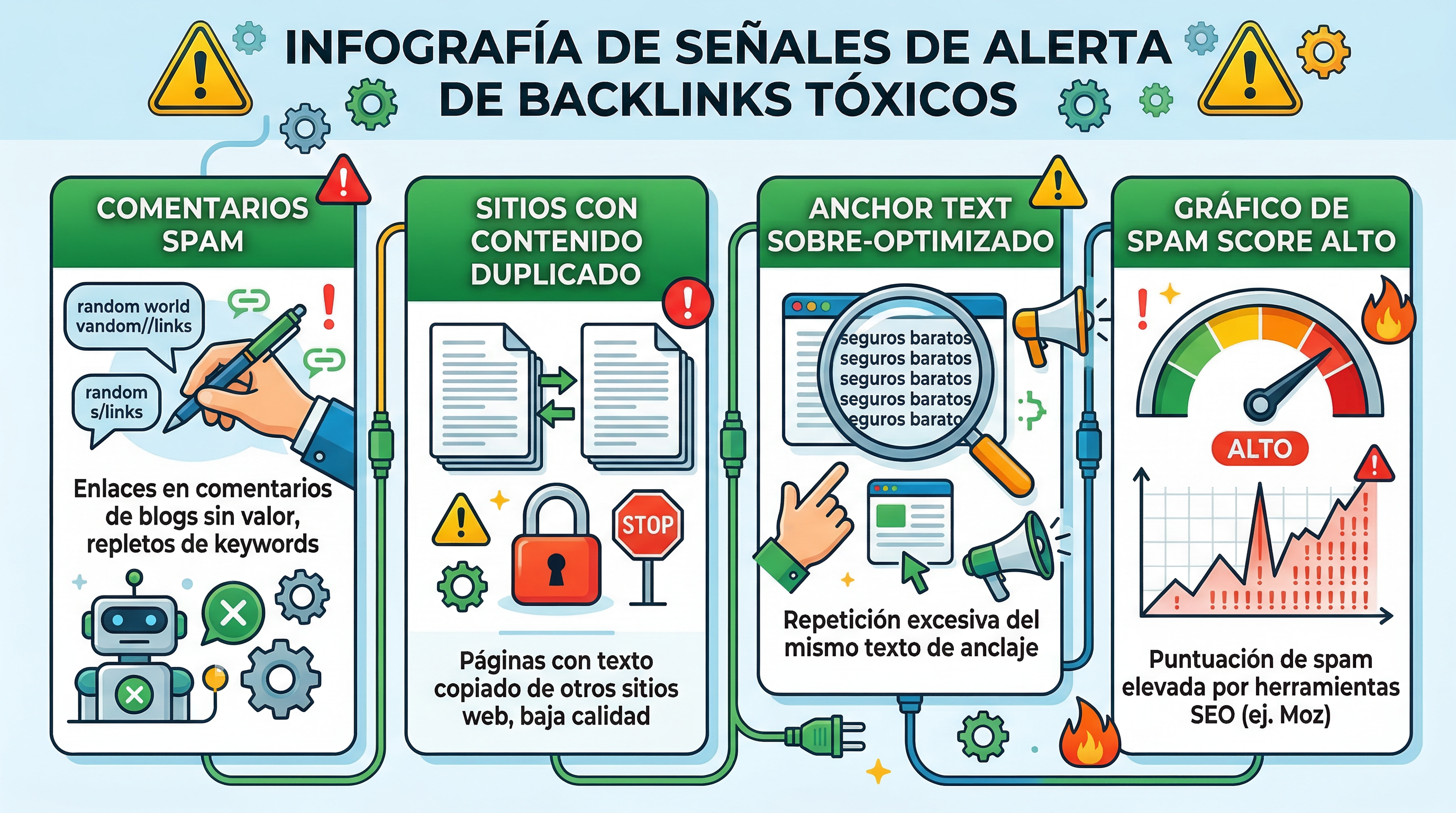
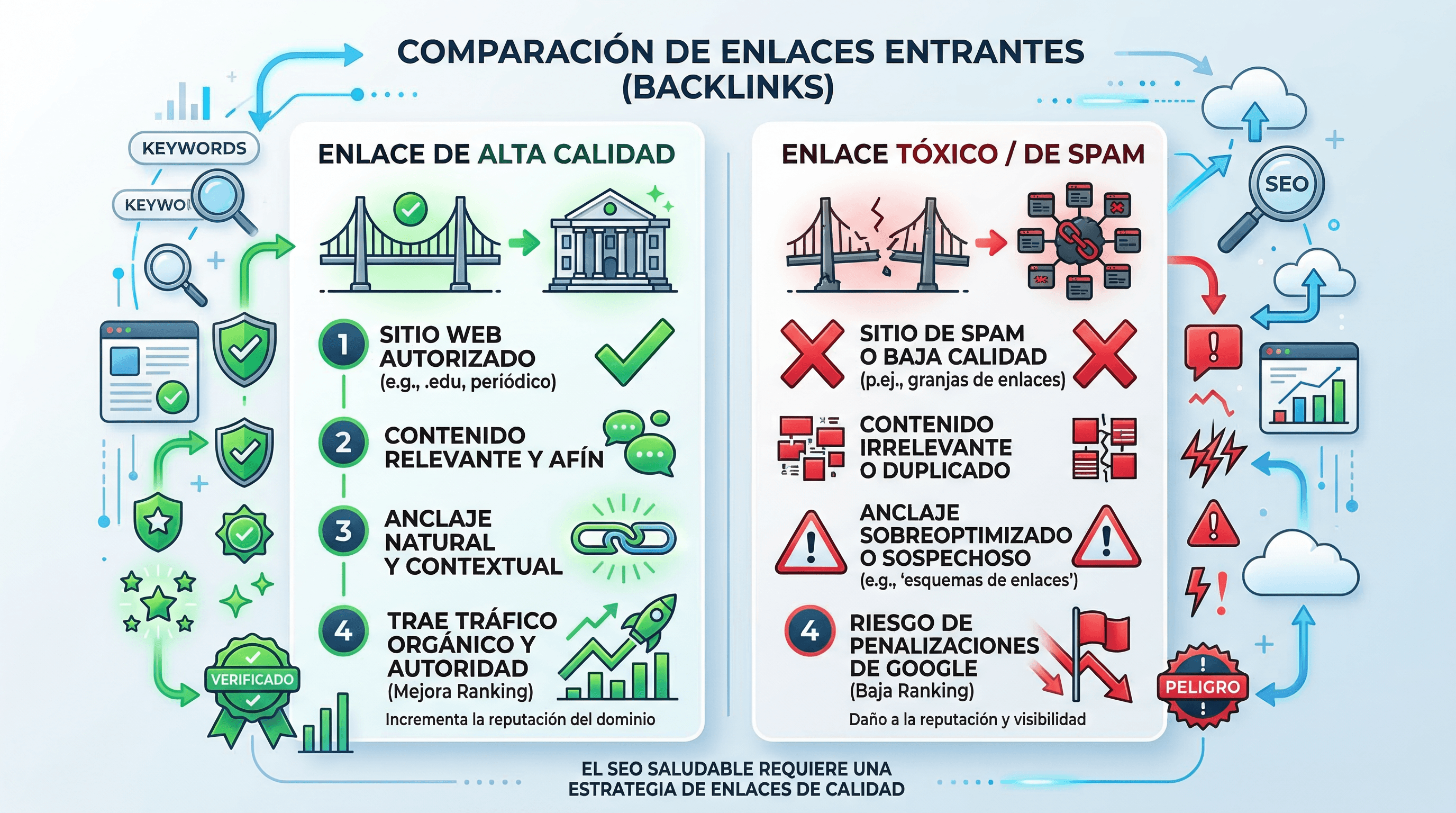
Not all backlinks are welcome. Toxic links come from spam sites, link farms, private blog networks (PBNs), or domains penalized by Google. These links can trigger manual or algorithmic actions that sink your organic visibility.
Warning signs include: spam score above 30%, sites with irrelevant or low-quality content, links from unmoderated blog comments, footers of sites without thematic relation, and patterns of over-optimized anchor text (many links with the same exact keyword).
If you detect toxic backlinks, the first step is to try to contact the webmaster to request removal. If you get no response in 2-3 weeks, use Google's disavow tool to indicate you do not want those links to be considered. Document each disavowed link and review the disavow file quarterly.
Spam score > 30% and no visible organic traffic
Duplicate, scraped, or automatically generated content
Links from sites with adult content, suspicious pharmaceutical, or gambling themes (if not your niche)
Over-optimized anchor text: >20% of links with the same exact keyword
Massive links from the same IP network or related domains
Sites with a history of Google manual penalties
Link Type | Risk | Recommended Action |
|---|---|---|
Unmoderated spam comments | High | Disavow immediately |
Low-quality directories | Medium | Evaluate case by case, disavow if spam score > 30% |
PBNs (private blog networks) | Very High | Disavow and document |
Links from footers without context | Medium-High | Request removal or disavow |
Hacked sites with injected links | High | Disavow and report to Google |
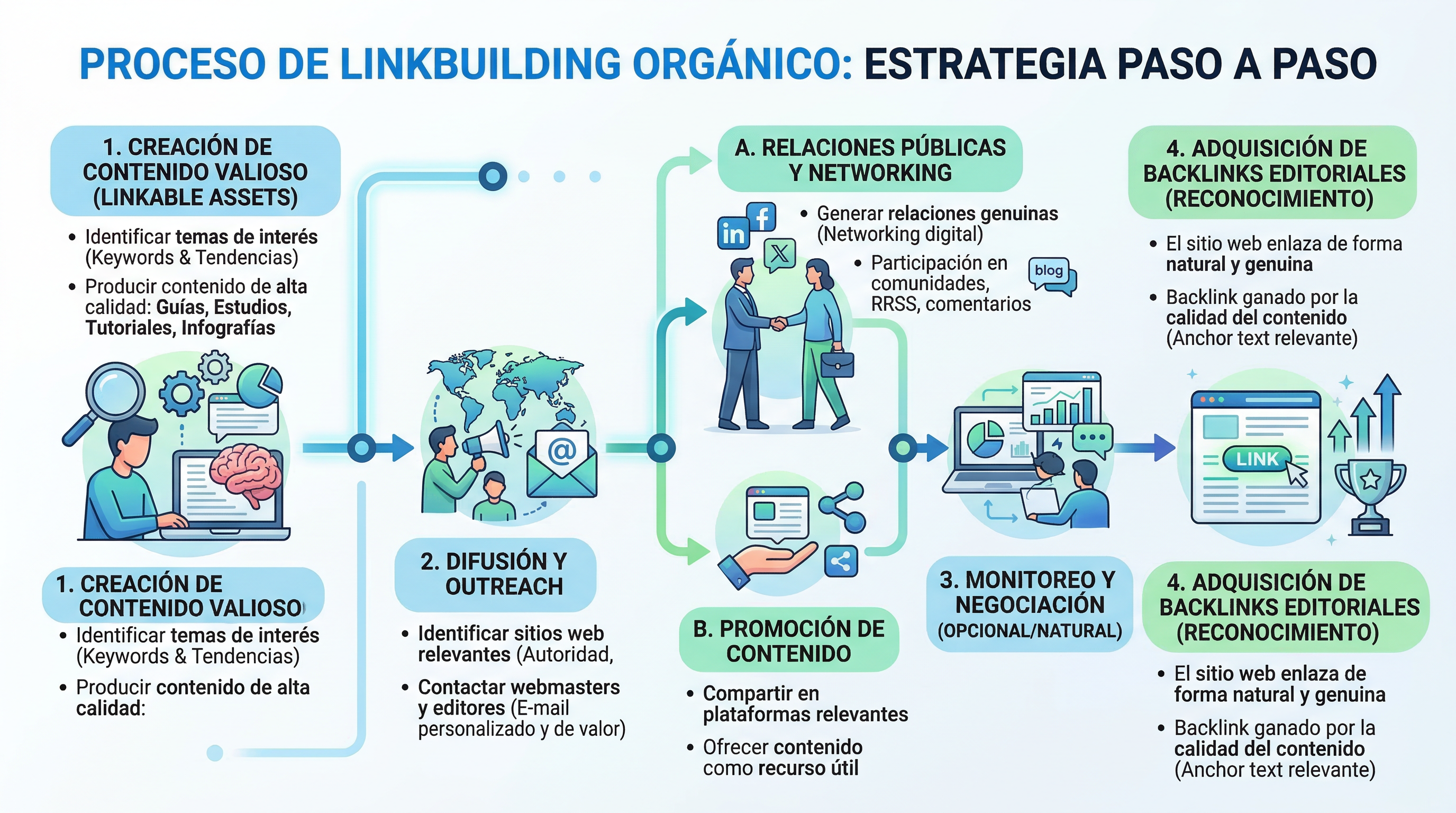
Acquiring quality backlinks requires a proactive strategy focused on creating valuable content and building genuine relationships with other players in your industry. The most effective link-building tactics for B2B SaaS combine educational content, original data, and strategic collaborations.
Guest posting on authority blogs remains one of the most direct ways to gain editorial links. Identify publications your target audience reads regularly, propose topics that provide unique value (not promotional content), and ensure the link to your site is contextualized naturally.
Another high-impact strategy is creating content based on original data: case studies, industry surveys, or trend analyses. This type of content attracts links organically because other sites cite it as a reference source. Complement this with targeted outreach to journalists and bloggers covering your sector.
**Linkable content**: Create exhaustive guides, studies with original data, infographics, and free tools that others will want to reference
**Strategic guest posting**: Publish on authority blogs in your niche with educational, non-promotional content. Prioritize quality over quantity
**Digital PR and outreach**: Identify journalists and bloggers covering your industry. Offer exclusive data, expert commentary, or early access to new features
**Broken link building**: Find broken links on authority sites in your niche and offer your content as a relevant replacement
**Collaborations and partnerships**: Co-create content with other complementary SaaS companies, joint webinars, or industry research
**Brand mentions without links**: Monitor mentions of your brand on the web and contact authors to request they convert the mention into a link
You may also be interested in: Success stories.
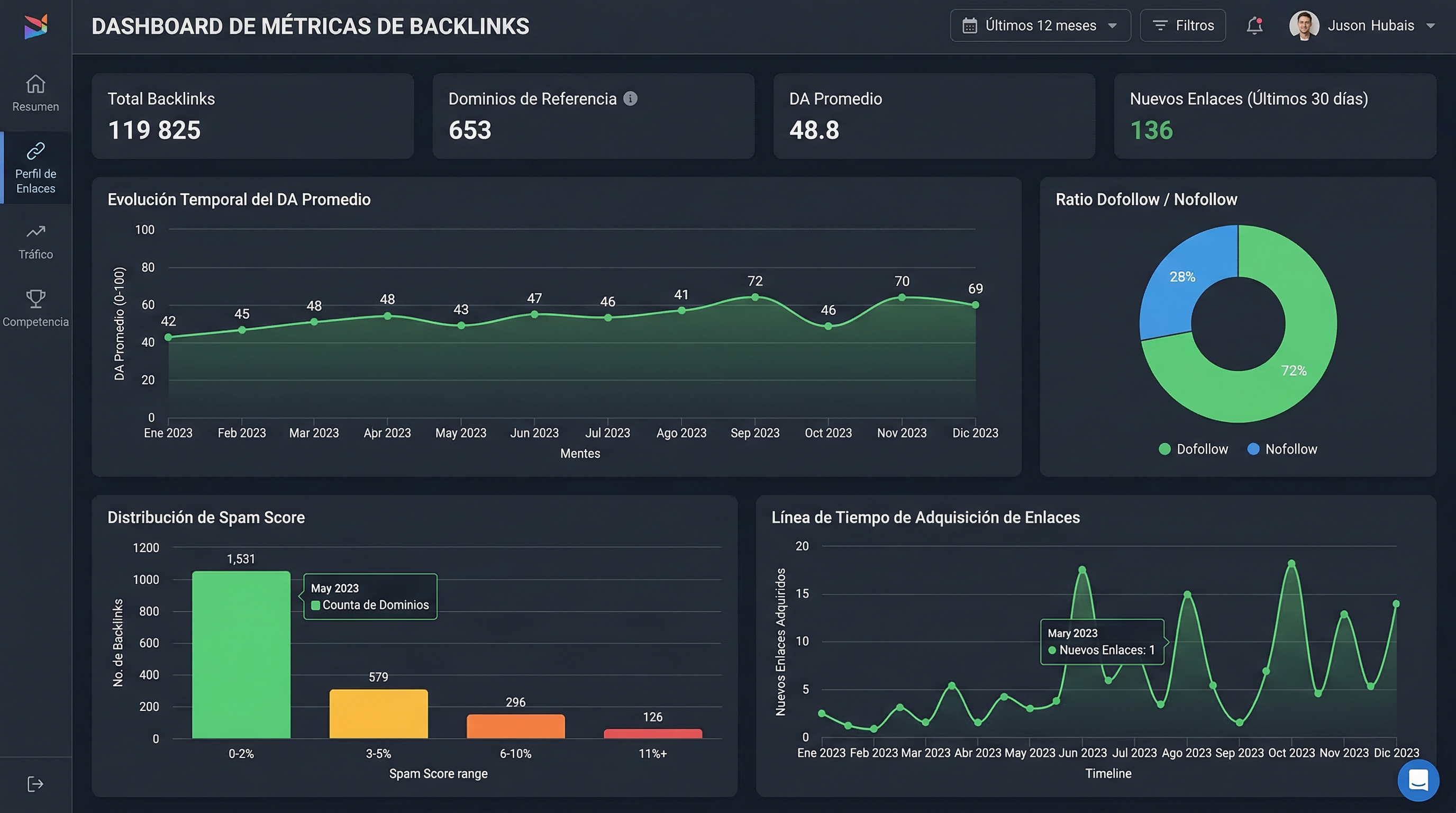
Beyond counting the total number of backlinks, you need metrics that reflect the quality and real impact of your link profile. Modern SaaS monitoring tools allow you to track advanced indicators that directly correlate with ranking improvements.
Domain Authority (DA) and Domain Rating (DR) are useful starting points, but they are not official Google metrics. Complement with data on the source site's organic traffic (available in tools like SimilarWeb or Ahrefs), and analyze the link acquisition velocity: organic and constant growth is more sustainable than sudden spikes.
Pay special attention to the dofollow vs. nofollow link ratio (a natural profile has ~70-80% dofollow), the diversity of referring domains (better 100 links from 100 domains than 100 links from 10 domains), and the referral traffic your backlinks generate. If a link does not generate clicks, its contextual value is questionable.
**Source Domain Authority/Rating**: Prioritize links from sites with DA/DR > 40
**Spam Score**: Keep the average spam score of your profile below 10%
**Source site organic traffic**: Links from sites with real traffic have more value
**Referring domain diversity**: More unique domains = more natural and resilient profile
**Dofollow/nofollow ratio**: Aim for ~70-80% dofollow in a balanced profile
**Referral traffic**: Measure actual clicks coming from your backlinks
**Anchor text distribution**: Natural variety without keyword over-optimization
**Acquisition velocity**: Constant and organic growth, without suspicious spikes
The most valuable backlink metrics are not those that measure quantity, but those that reflect relevance, contextual authority, and ability to generate qualified traffic.
You may also be interested in: Comparison.
Quality inbound links are the pillar of off-page SEO for any B2B SaaS looking to rank in competitive searches. But quality is not measured only in numbers: authority, relevance, naturalness, and editorial context are as important as domain metrics.
Implementing a continuous monitoring system allows you to detect opportunities, protect yourself against toxic links, and make decisions based on real data about your link-building strategy. Modern SaaS tools automate much of this work, freeing up time for your team to focus on creating valuable content and building genuine relationships in your industry.
Remember that acquiring quality backlinks is a long-term process. There are no sustainable shortcuts. Invest in creating content that others want to reference, build authentic relationships with players in your niche, and proactively monitor your link profile to maintain organic growth resilient to algorithm changes.
There is no magic number. Quality surpasses quantity: 10 links from high-authority and thematically relevant sites can have more impact than 100 links from generic directories. Focus on obtaining links from domains with DA > 40, relevant to your niche, and that generate real referral traffic. Organic growth of 5-10 quality backlinks per month is more sustainable and safer than sudden spikes.
A backlink is potentially toxic if it comes from a site with spam score > 30%, irrelevant or low-quality content, private blog networks (PBNs), or shows patterns of over-optimized anchor text. Use audit tools to identify these links. If you detect suspicious backlinks, first try to contact the webmaster to request their removal. If you get no response, use Google's Disavow Tool to disavow them.
Yes, although they do not transmit direct authority (link juice), nofollow links provide indirect value: they generate referral traffic, diversify your backlink profile (a 100% dofollow profile can appear artificial), and Google considers them as signals of context and relevance. A natural profile includes ~20-30% nofollow links. Furthermore, nofollow links from high-authority sites like social networks or recognized media can boost your visibility and generate secondary dofollow backlinks.
Perform a complete quarterly audit to review the general health of your profile: DA distribution, spam score, anchor text, and detect toxic links. Complement with continuous monitoring through automatic alerts to receive notifications when you gain or lose important backlinks. If you are in an active link-building campaign or have suffered a negative SEO attack, increase the frequency to monthly reviews until your profile stabilizes.
The most effective tools combine data from multiple sources, offer quality metrics (DA, spam score, organic traffic), and allow configuration of automatic alerts. TheLinkHub centralizes backlink monitoring with real-time alerts, quality analysis, and competitor comparisons. Other options include Ahrefs, SEMrush, and Moz, although they are usually more expensive. The important thing is to choose a tool that integrates with your workflow and offers actionable data, not just generic reports.