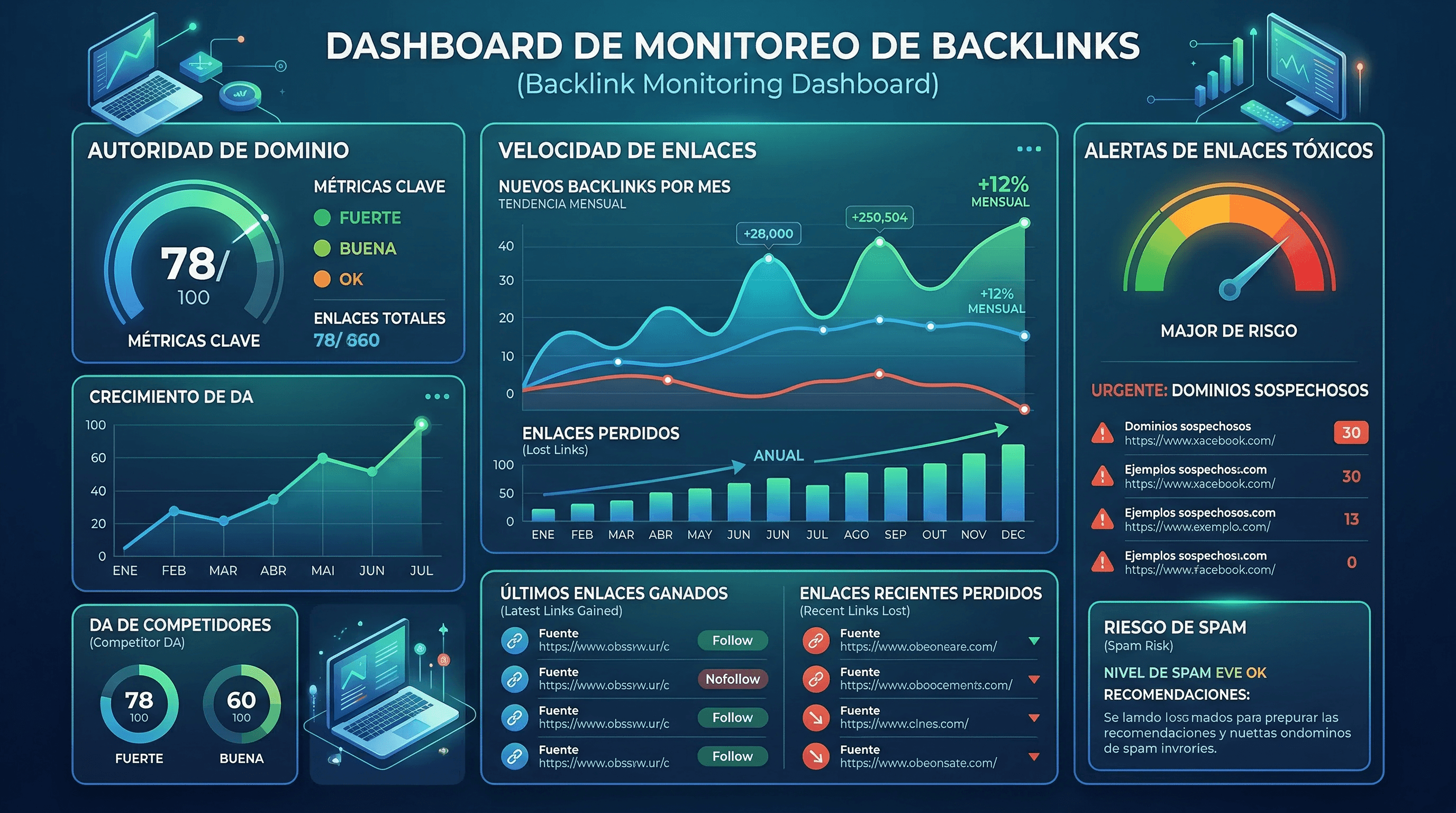
Building backlinks consumes time, budget, and strategic effort. But acquiring links is only half the job: without constant monitoring, your backlink profile can become a silent risk to your ranking.
Every week, websites lose valuable links, accumulate toxic backlinks unknowingly, or experience link velocity spikes that trigger Google alerts. For B2B marketing teams and SaaS SEO managers, not monitoring links means losing visibility into one of the most important ranking factors.
In this guide, you'll discover why backlink monitoring is not optional, what risks you avoid by doing it correctly, and how specialized tools help you maintain a healthy link profile that boosts your domain authority.
Many SEO teams build links but don't verify what happens afterward. This lack of follow-up creates costly problems that could be avoided with regular monitoring.
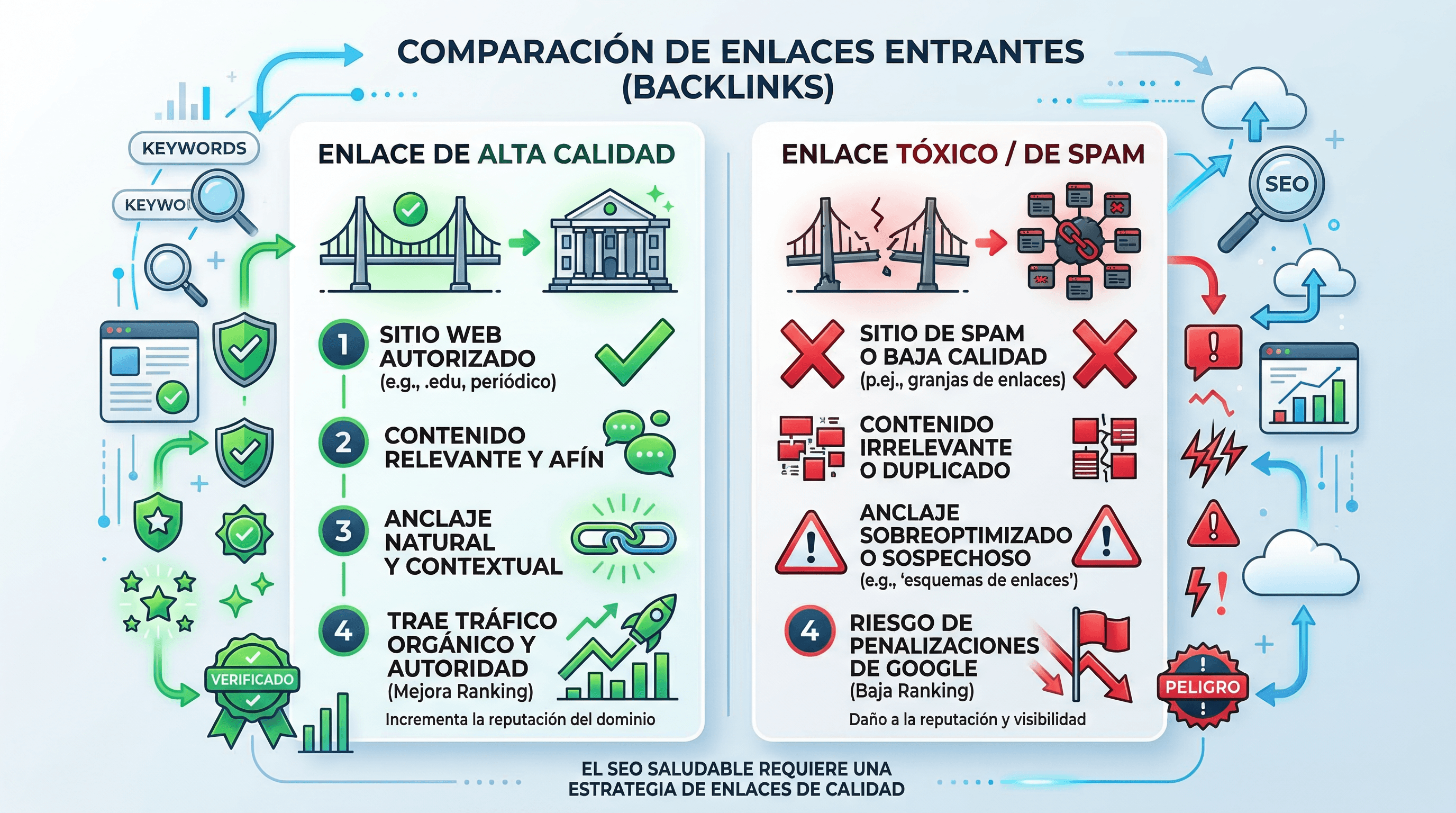
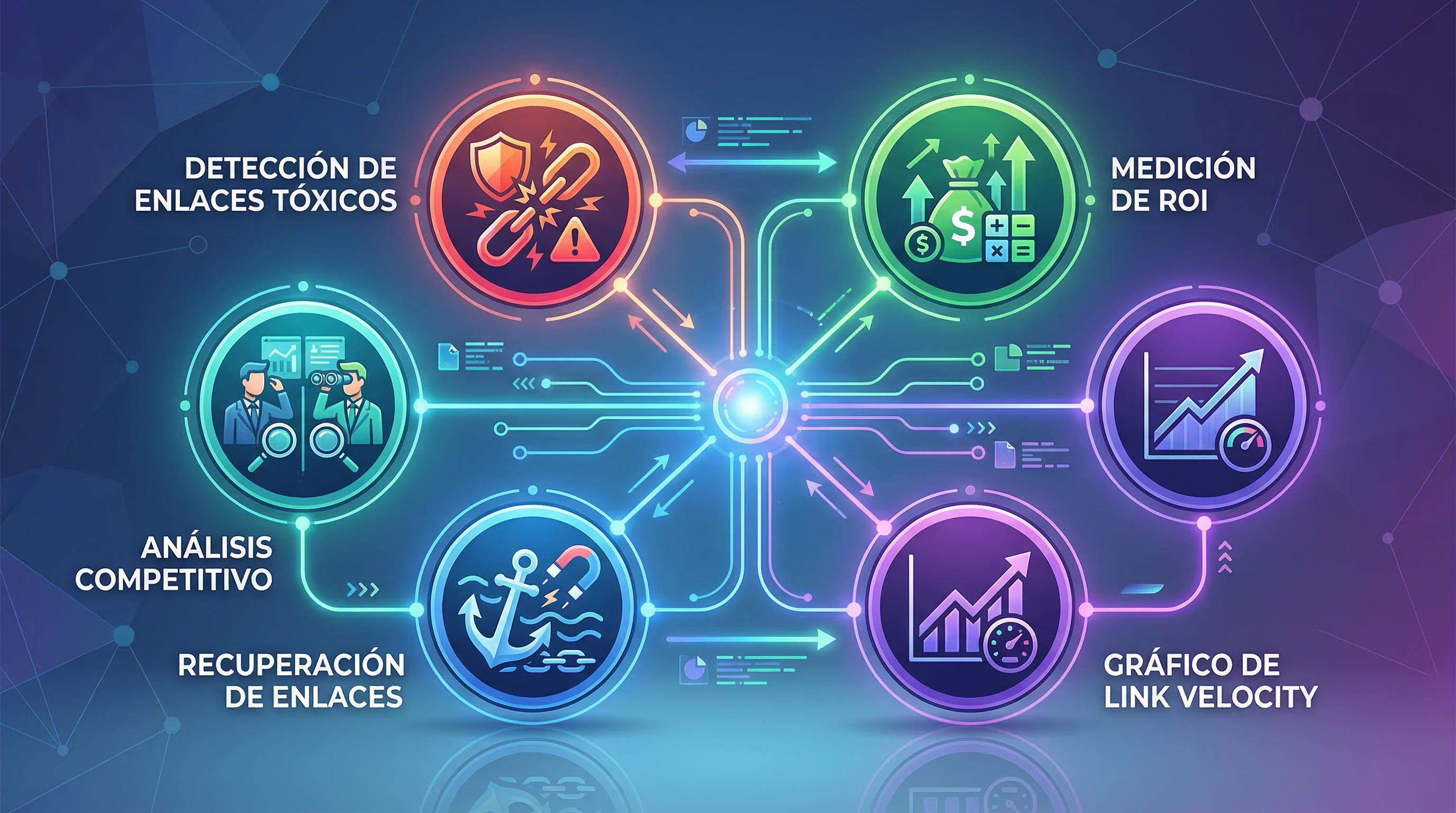
**Detect toxic links before penalties**: Google penalizes profiles with spam backlinks, from link farms or low-quality sites. Tools like Ahrefs and SEMrush identify links with suspicious metrics (high spam score, over-optimized anchor text) so you can use the disavow tool before they affect your ranking.
**Measure real effectiveness of your link building**: Not all backlinks generate the same impact. Monitoring allows you to identify which links bring referral traffic, improve specific positions, or increase your Domain Rating, thus optimizing your ROI on outreach campaigns.
**Control link velocity and natural patterns**: Too rapid growth of backlinks (or massive losses) alerts Google to manipulation. Monitoring your link velocity helps you maintain an organic and sustainable growth profile.
**Recover lost links**: Websites change, redesign, or delete content constantly. Monitoring alerts you when you lose valuable backlinks, allowing you to contact the webmaster to recover them or redirect broken URLs.
**Monitor competition and opportunities**: Observing competitors' backlink profiles reveals link building opportunities that work in your niche, plus identifies sites that link to multiple competitors but not to you.
You may also be interested in: Backlink Validator.
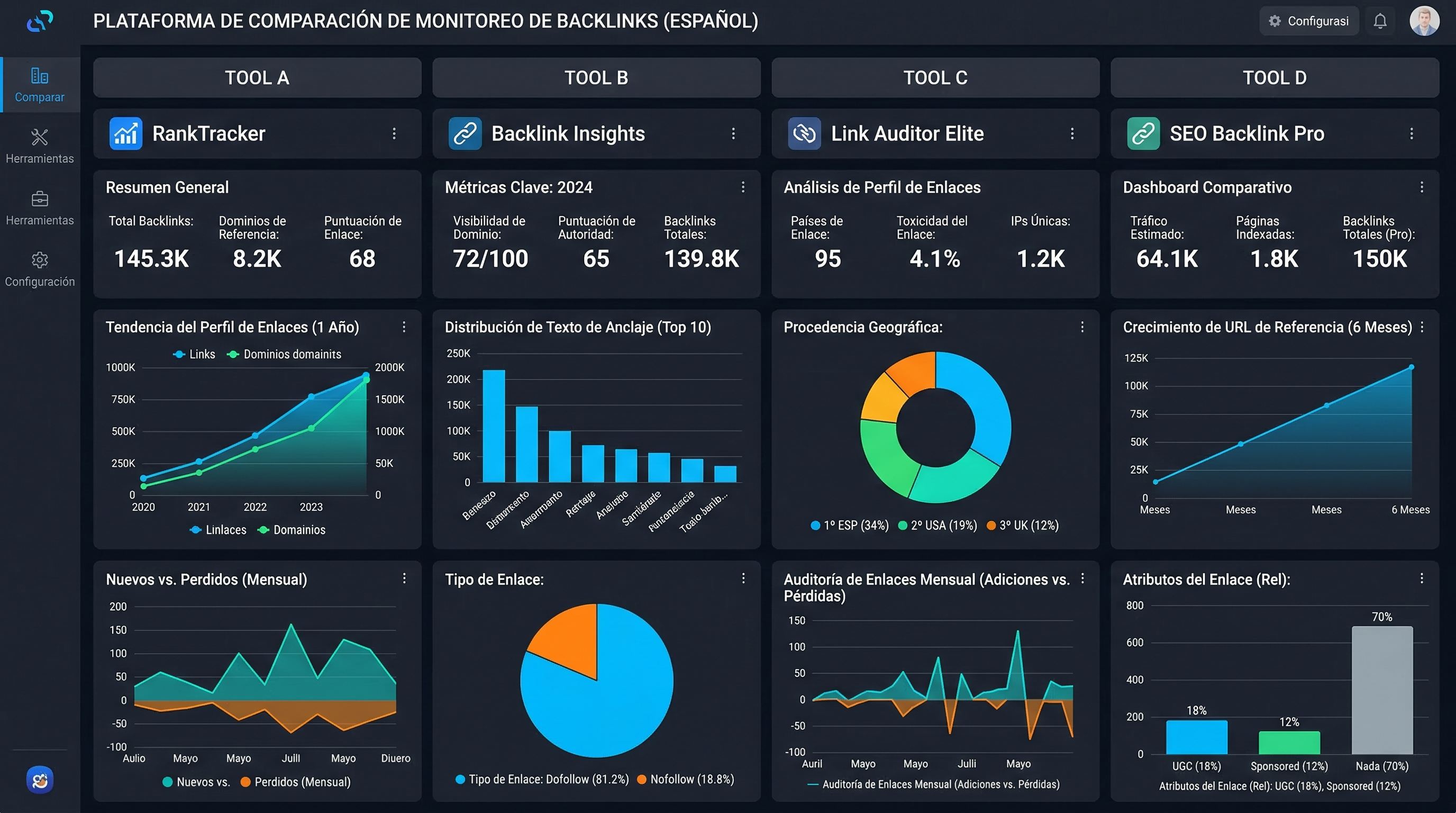
The market offers multiple solutions for monitoring backlinks, each with distinct strengths. For B2B SaaS teams, the key lies in balancing data depth, update frequency, and ease of integration with existing workflows.
Tool | Best for | Update frequency | Key advantage |
|---|---|---|---|
Ahrefs | Deep analysis and competition | Daily | Largest database, detailed quality metrics |
SEMrush | Complete SEO suite + backlinks | Daily | Integration with technical audits and keyword research |
Google Search Console | Free basic monitoring | Weekly | Direct data from Google, no cost, ideal for validation |
Majestic | Historical link analysis | Daily | Trust Flow and Citation Flow to evaluate authority |
TheLinkHub | Automated SEO operations | Real-time | Instant alerts, personalized workflows for teams |
You may also be interested in: Comparison and Pricing.
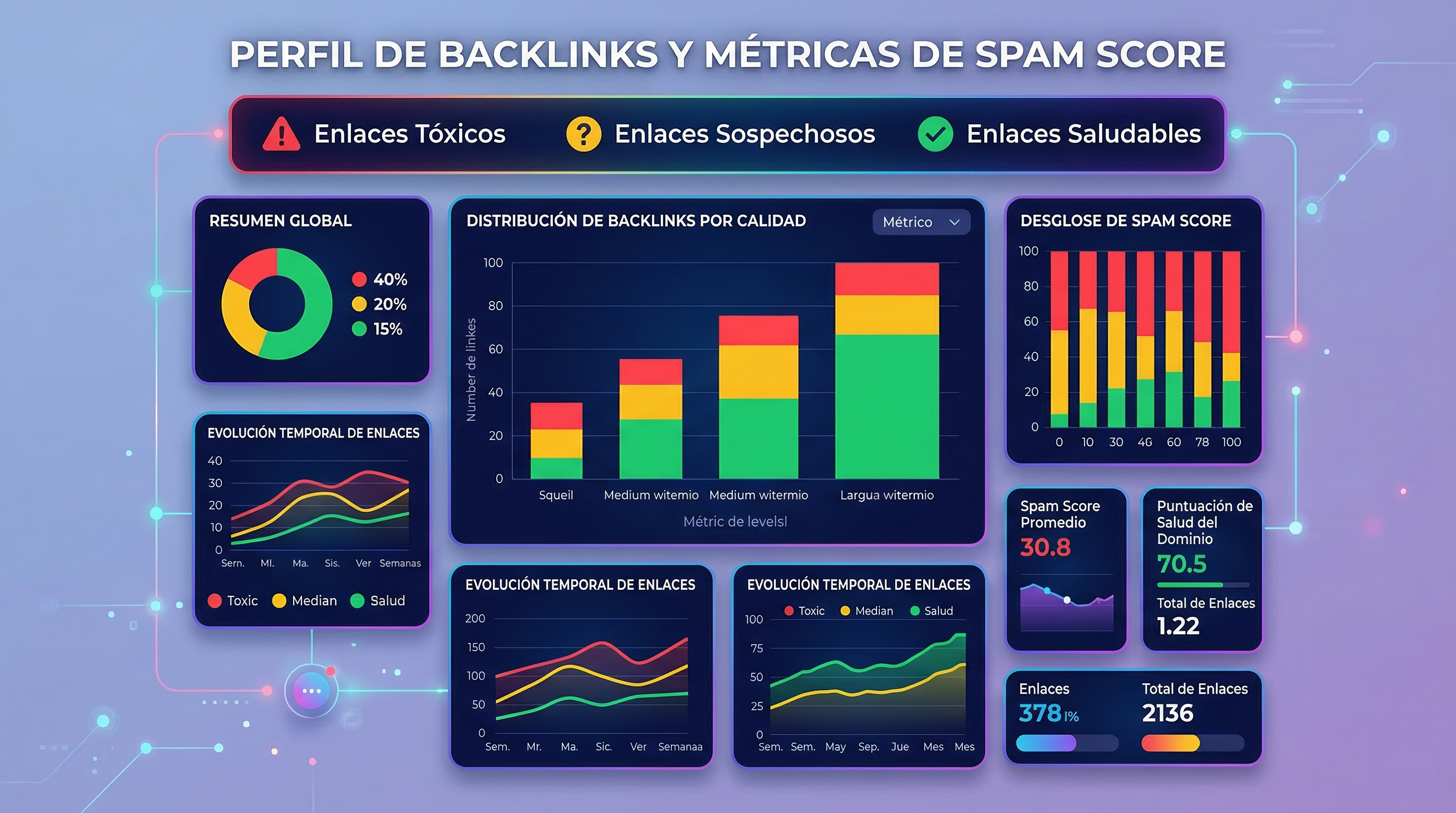
Not all backlinks are welcome. Links from spam sites, link farms, low-quality directories, or PBNs (Private Blog Networks) can do more harm than good to your SEO profile.
Signals of a toxic link include: spam score above 60%, repetitive exact anchor text, sites with no organic traffic, domains with multiple previous penalties, or content irrelevant to your niche.
The management process involves three steps: regular audits with specialized tools, removal attempts by contacting webmasters, and using the Google Disavow Tool for links you cannot remove manually. For B2B teams, automating these quarterly audits saves hours of manual work.
**High spam score**: Metrics above 60% in Moz or Ahrefs indicate problematic sites
**Over-optimized anchor text**: More than 30% of links with exact keywords is unnatural
**Sites with no organic traffic**: Domains without real visibility are usually spam
**Sudden link spikes**: Hundreds of backlinks in days suggest purchase or black hat schemes
**Domains with previous penalties**: Sites that have been penalized spread risk
A single toxic link doesn't destroy your SEO, but 50 low-quality links accumulated over months can trigger algorithmic filters that take quarters to reverse.
You may also be interested in: Backlink Validator.
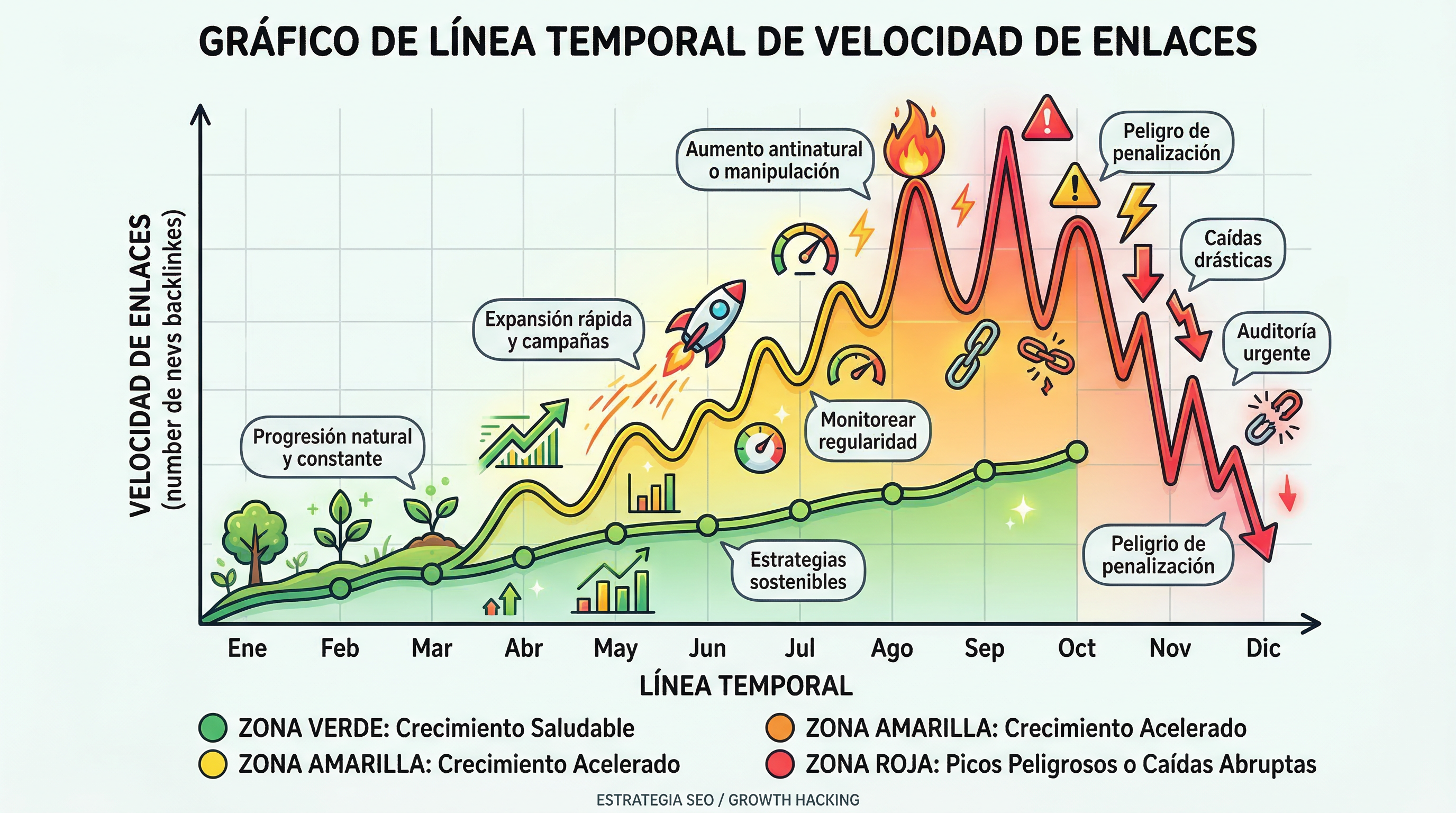
Google expects backlinks to grow organically and proportionally to your site's authority and content. A new site gaining 200 backlinks in a week raises red flags, while an established one can absorb that growth naturally.
Optimal link velocity varies by your industry, current domain authority, and content type. For B2B SaaS, 5-15% monthly growth in quality backlinks is sustainable. Spikes above 50% monthly require justification (viral launch, media coverage, etc.).
Monitoring your velocity allows you to detect two critical problems: artificial acquisition (mass link buying) and massive losses (website redesigns that break links, deleted content). Both scenarios require immediate action to stabilize your profile.
**Natural growth**: 5-15% monthly for established SaaS, 20-30% for startups with viral content
**Justified spikes**: Product launches, mentions in major media, original studies shared
**Concerning losses**: More than 10% of backlinks lost in a month without known technical changes
**Seasonality**: B2B industries see less link activity in summer and December
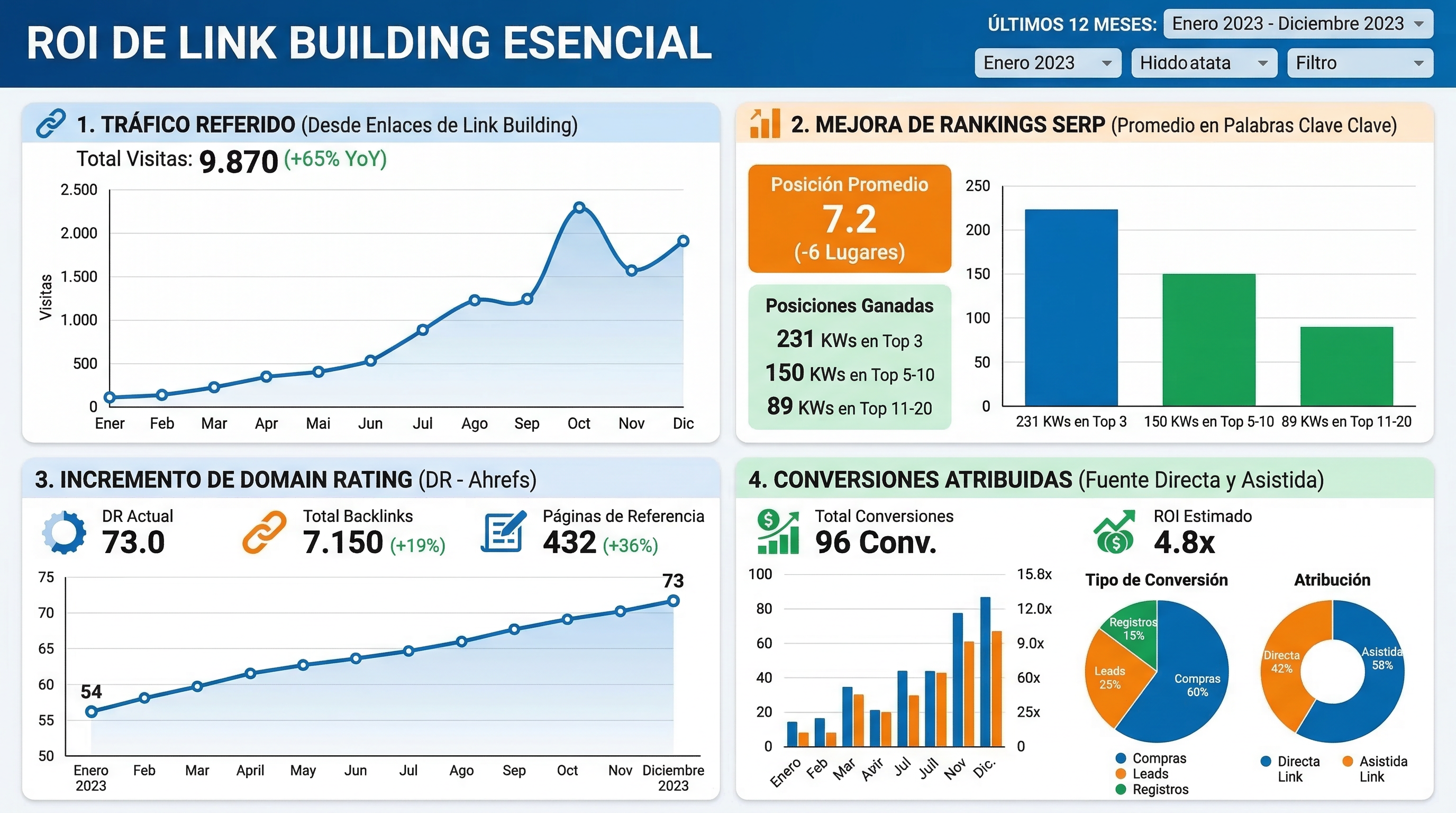
For B2B teams with limited budgets, every hour invested in outreach, guest posting, or digital PR must be justified with concrete data. Backlink monitoring turns link building from a tactical activity into a measurable channel with clear ROI.
Key KPIs include: increase in Domain Rating/Authority, improvement in positions for target keywords, referral traffic from specific backlinks, and conversions attributable to that traffic. Advanced tools allow tagging backlinks by campaign to measure comparative effectiveness.
A typical case: a guest posting campaign on 10 sites may generate 10 backlinks, but only 2-3 bring real traffic and improve rankings. Without monitoring, you'd keep investing in the 7 low-impact sites. With data, you optimize effort toward the channels that work.
**Qualified referral traffic**: Backlinks that send visitors with bounce rate <50% and time on site >2 minutes
**Ranking improvement**: Links that correlate with ranking jumps on target keywords (tracking with rank tracking tools)
**Authority increase**: Measurable growth in Domain Rating or Domain Authority after specific campaigns
**Attributed conversions**: Leads or demos generated from backlink referral traffic (requires UTM tracking)
You may also be interested in: Success stories.
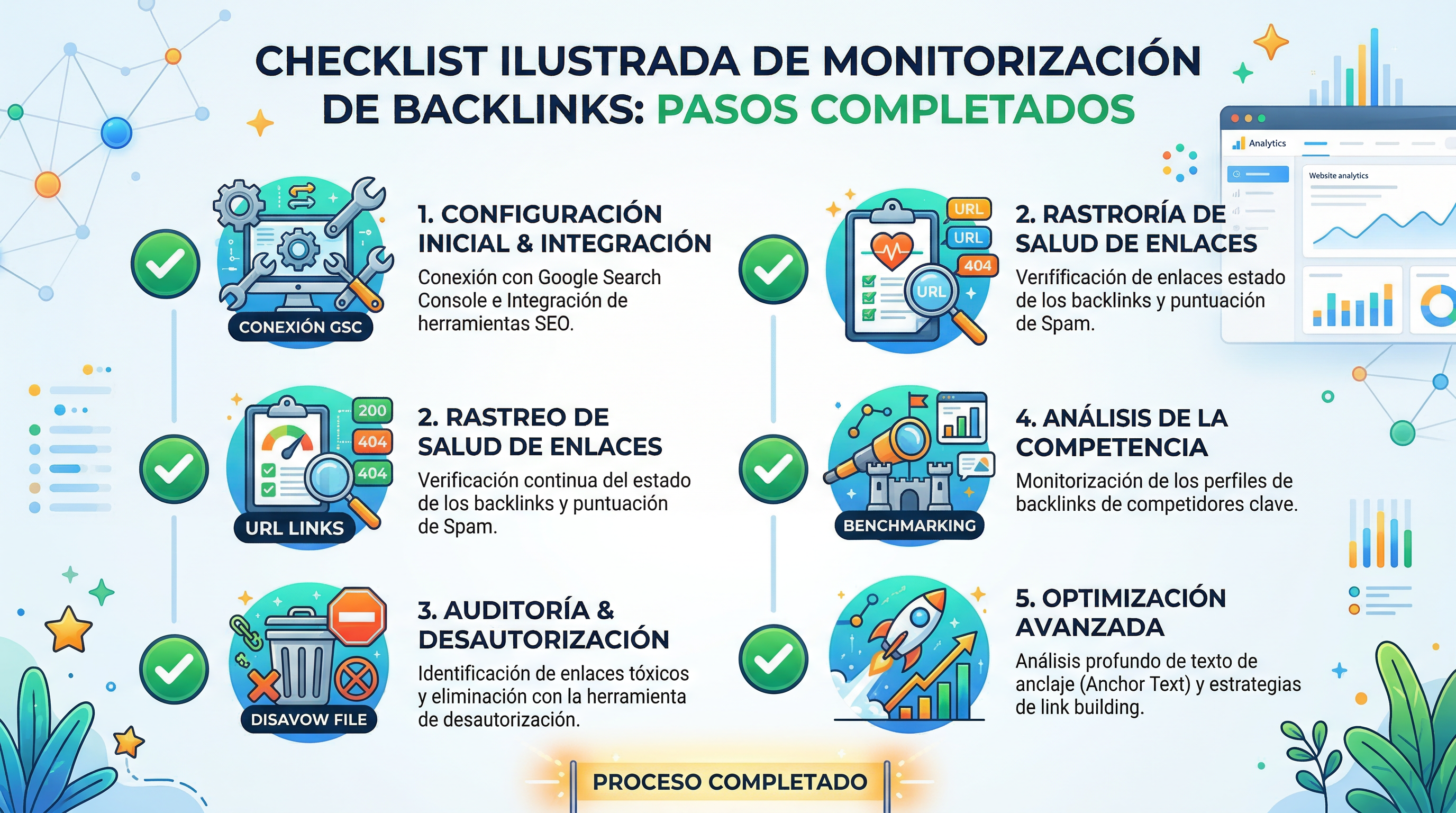
Effective monitoring doesn't require expensive tools from day one. Start with Google Search Console (free) to establish a baseline, then scale with specialized tools according to your budget and needs.
**Week 1**: Connect Google Search Console and export your current backlink profile. Identify your 20 most valuable links (highest referral traffic and DR).
**Week 2**: Audit toxic links with the free version of Ahrefs or SEMrush. Create a list of links with spam score >60% to review manually.
**Week 3**: Set up automatic alerts for new backlinks and losses. Tools like TheLinkHub send real-time notifications.
**Week 4**: Analyze your link velocity from the last 6 months. Identify abnormal spikes or drops and document causes (campaigns, technical changes).
**Monthly**: Review lost backlinks and contact webmasters to recover the most valuable ones. Update your disavow file if you find new toxic links.
**Quarterly**: Compare your profile with 3 main competitors. Identify opportunity gaps (sites that link to them but not to you).
You may also be interested in: Contact and About us.
Monitoring your backlinks is not an optional task for serious SEO teams: it's the difference between building sustainable authority and wasting budget on links that don't contribute or, worse, damage your ranking.
B2B teams that implement systematic monitoring detect problems before they affect rankings, optimize investment toward tactics that work, and maintain healthy link profiles that withstand algorithmic updates.
Start today with free tools like Google Search Console to establish your baseline. When your SEO operation scales, specialized platforms like TheLinkHub automate alerts, audits, and workflows that save your team hours weekly.
Ready to take control of your backlink profile? Explore our free backlink validator or schedule a demo to see how to automate your SEO monitoring.
For B2B SaaS sites, review backlinks weekly with automatic alerts for critical changes (new toxic links, losses of valuable links). Perform complete monthly audits to analyze link velocity trends and campaign ROI. Google Search Console updates data every 2-3 days, while tools like Ahrefs and SEMrush offer daily updates.
There's no exact number, but if more than 10% of your total profile has a spam score above 60%, you need immediate action. Google evaluates proportion and context: 5 toxic links in a profile of 50 backlinks is more concerning than 50 toxic links in a profile of 5,000 quality links. Use the disavow tool for links you cannot remove manually.
Start with Google Search Console (free) to understand your base profile and detect obvious problems. When you need deeper analysis, Ahrefs offers the most complete database for competitive analysis, while SEMrush integrates backlinks with technical audits. For teams seeking automation and real-time alerts, TheLinkHub optimizes specific SEO operations workflows.
Compare your velocity with your history and similarly sized competitors. For established B2B SaaS, 5-15% monthly growth is sustainable. Startups with viral content can justify 20-30%. Spikes above 50% monthly without special events (launch, media coverage) alert Google. Use tools like Ahrefs to graph your velocity and detect anomalies.
Yes, in many cases. When you detect a valuable lost backlink, contact the webmaster explaining that the link was removed (due to redesign, content update, etc.) and request restoration or redirection. Offer value: update your linked content, suggest improvements, or provide additional resources. Typical success rate: 20-30% of links recovered with proactive outreach.